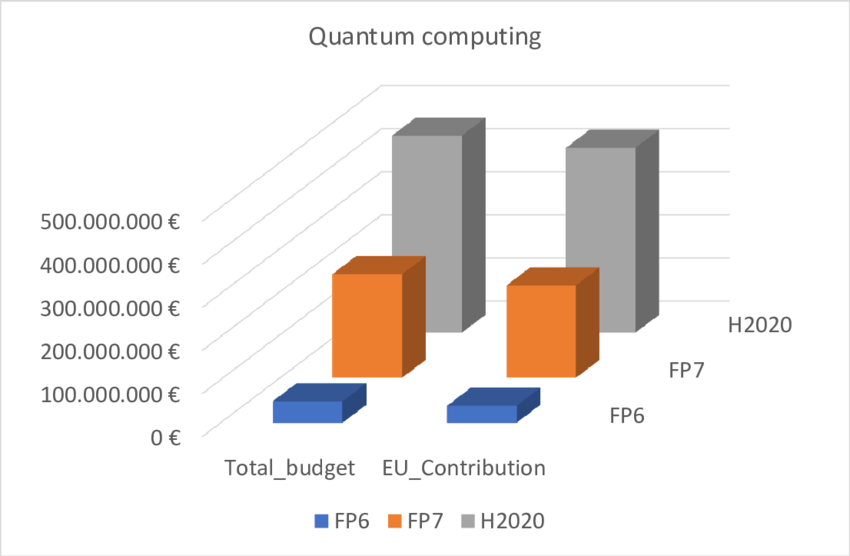

For quantum hardware companies, the battle is not just for qubits but for runway. Non dilutive quantum computing funding from grants, R&D tax relief and innovation loans now sits alongside equity as a core part of the capital stack. Used well, it stretches burn without compromising strategic control. Used badly, it can slow programmes and introduce avoidable risk.
This article sets out a CFO level playbook for securing non dilutive quantum computing funding in the UK and EU, with a particular focus on hardware intensive businesses.
Why quantum computing funding needs a different playbook
Quantum hardware is unusually capital intensive. Facilities, cryogenic systems, vacuum equipment and specialist fabrication push early stage capex far above typical software or AI ventures. At the same time, public funders see quantum as strategically critical.
On the public side:
- The UK government has committed more than £500 million over four years to quantum computing as part of a broader long term quantum programme.
- Over the past five years, EU and member state public funding for quantum technologies has exceeded €11 billion.
- Innovate UK and UKRI are running targeted competitions such as the Quantum Missions pilot for quantum computing and networks, with over £12 million invested across ten projects in 2025.
This creates real opportunity, but also complexity. Calls are fragmented across Innovate UK, UKRI councils, EuroHPC, Horizon Europe and national programmes, each with different rules on state aid, co funding and eligible costs.
For CFOs, the central challenge is to build a coherent, multi year funding stack that:
- Matches the technology roadmap and TRL progression.
- Minimises dilution without over engineering proposals.
- Stays within subsidy rules and tax legislation.
- Stands up to increasing scrutiny from HMRC, EU auditors and investors.
The non dilutive toolkit for quantum hardware
1. R&D tax relief and enhanced R&D intensive support
For UK based quantum companies, R&D tax relief remains the backbone of non dilutive support, even as grant funding grows. Relief is now delivered through a merged RDEC style scheme with an enhanced R&D intensive support (ERIS) layer for loss making, R&D heavy SMEs.
For quantum hardware, qualifying costs typically include:
- Salaries and employer NIC for scientists, engineers and technicians working on qualifying R&D.
- Consumables, prototype materials and certain testing costs.
- Subcontracted R&D and externally provided workers, within scheme limits.
Relief is most powerful when integrated into quarterly cash planning rather than treated as an annual afterthought. For deep tech CFOs this often means:
- Building R&D relief into runway modelling.
- Using relief to backfill co funding requirements in grants.
- Stress testing claims for HMRC enquiry risk in complex, frontier technologies.
2. Innovate UK and UKRI quantum competitions
Innovate UK and UKRI run targeted calls under the National Quantum Technologies Programme and related initiatives. These include:
- The Quantum Missions pilot competition for quantum computing and networks, which allocated over £12 million to ten projects to accelerate commercialisation.
- Dedicated Innovate UK competitions for quantum computing and networks, with individual pots of around £9.5 million to support mission aligned projects.
Typical features include:
- Funding rates of 50 to 70 per cent for industrial collaborations, with higher rates for SMEs and feasibility studies.
- TRL windows that favour mid stage experimental development rather than basic science.
- Portfolio approaches that balance hardware, software, networks and applications.
For quantum hardware CFOs, Innovate UK grants are often the most accessible non dilutive instrument for project based work, but they require careful alignment between technical scope, partners and co funding.
3. Horizon Europe, Quantum Flagship and QuantERA
Now that the UK has associated to Horizon Europe, UK quantum companies can re engage fully with EU calls for quantum technologies.
Key routes include:
- Quantum Flagship topical calls under the Digital, Industry and Space clusters.
- QuantERA transnational calls that support coordinated research projects across multiple countries.
These typically fund:
- Collaborative R&D at TRLs 2 to 6.
- Multi partner consortia that combine universities, research organisations and companies across at least three countries.
Horizon projects are administratively heavier than national grants, but for quantum hardware they can finance expensive enabling work such as materials characterisation, control electronics and cryogenic infrastructure.
4. EuroHPC quantum calls
The EuroHPC Joint Undertaking has launched dedicated calls to strengthen Europe’s leadership in quantum computing, with:
- Total call budgets around €15 million for quantum related actions.
- Individual projects often receiving €3 million to €5 million over three years to build industrial scale quantum computing platforms or roadmap solutions.
For companies building or integrating quantum processors into high performance computing stacks, EuroHPC is an increasingly important source of capital, particularly when working with national supercomputing centres.
5. Innovation loans and other repayable but non dilutive instruments
Innovation loans and similar instruments sit between pure grants and equity. They are repayable, but do not involve share capital. In practice they can:
- Help bridge from grant funded demonstrators to pilot manufacturing.
- Reduce the size of Series A or B rounds needed to reach meaningful milestones.
CFOs should treat these as part of the non dilutive quantum computing funding stack, but carefully model repayment schedules and covenant constraints.
Comparing instruments: a CFO snapshot
Table 1. Non dilutive quantum computing funding options for hardware
| Instrument | Typical TRL focus | Typical company co funding | Key advantages | Key risks and constraints |
|---|---|---|---|---|
| R&D tax relief and ERIS | 3 to 8 | 100 per cent costs incurred, later relieved via tax system | Flexible, retrospective, aligned with existing spend | HMRC scrutiny, cash timing, documentation requirements |
| Innovate UK / UKRI grants | 4 to 7 | 30 to 50 per cent for SMEs, more for feasibility | Direct non repayable support, UK strategic alignment | Competitive calls, portfolio politics, match funding needed |
| Horizon Europe / Quantum Flagship | 2 to 6 | Often 30 to 50 per cent industry cash or in kind | Large multi year projects, EU ecosystems | Heavy coordination, consortium complexity |
| EuroHPC quantum calls | 4 to 7 | Significant co funding, often with research partners | Big tickets, access to HPC infrastructure | Narrow scope, intense competition |
| Innovation loans | 6 to 8 | Full repayment over time | Bridges to scale up, non dilutive | Debt on balance sheet, repayment risk |
Designing a funding stack for quantum hardware
From a CFO’s perspective, the right question is not “which grant should we chase” but “how do we assemble a funding stack that matches our roadmap and ownership strategy”. A common structure for quantum hardware looks like this:
- Foundational science and early architecture
- Dominated by research grants and Horizon style projects.
- Objective is to prove physical feasibility and basic error models.
- Prototype platforms and system integration
- Innovate UK or binational calls provide capital for key sub systems, for example control electronics or cryogenic integration.
- R&D tax relief begins to matter as own funded work grows.
- Demonstration systems and pilot customers
- Larger Innovate UK projects, EuroHPC calls or innovation loans support scaling from lab rigs to pilot devices.
- Non dilutive instruments are combined with venture capital, with grants reducing perceived technical risk for investors.
- Pre commercial manufacturing and service deployment
- R&D relief and ERIS absorb a growing share of ongoing R&D spend.
- Equity rounds focus on market development and international expansion rather than pure technical proof.
At each stage, funding strategy should be reviewed against three constraints: state aid limits, capacity to deliver multi partner projects, and the organisation’s ability to absorb audit and reporting requirements.
Governance and risk: what boards want to see
Boards and investors in quantum hardware companies increasingly expect:
- A documented funding roadmap aligned to technology and commercial milestones.
- Clear articulation of how non dilutive quantum computing funding changes burn, runway and dilution.
- Robust processes for grant compliance, R&D tax evidence and interactions with public bodies.
Given HMRC’s tighter stance on R&D tax relief and the EU’s focus on reducing fraud and error in structural funds, weak governance around non dilutive funding is now a material risk, not a side issue.
How FI Group supports quantum companies
As an innovation funding consultancy working across Europe and beyond, FI Group focuses on helping deep tech companies navigate this complexity rather than on any single instrument. The firm manages R&D tax incentives and grants for more than 15,000 clients globally and employs around 1,400 scientific and technical experts across 34 offices.
In the quantum domain, that typically means:
- Mapping the full spectrum of UK and EU quantum funding calls against a company’s roadmap.
- Structuring projects so that grant funding, R&D tax relief and innovation loans reinforce rather than crowd out each other.
- Building evidence and governance frameworks that satisfy both HMRC and EU level audit expectations.
For CFOs, the value of this kind of support lies in turning a fragmented funding environment into a coherent, multi year plan that aligns with ownership goals and risk appetite.
Practical action plan for deep tech CFOs
To translate this into action:
- Diagnose your funding gap
- Quantify cash needs over a three to five year horizon for core technology and supporting infrastructure.
- Segment the roadmap
- Break the technology plan into projects that match specific funders’ TRL and scope criteria.
- Prioritise funders by strategic fit
- Use Innovate UK and UKRI where alignment with UK missions is strong.
- Target Horizon or EuroHPC where European ecosystem or infrastructure access is critical.
- Build a conservative R&D tax model
- Integrate R&D relief and ERIS into forecast models with scenario analysis for HMRC enquiries.
- Institutionalise governance
- Treat grant compliance and R&D tax evidence as part of the control environment, not an afterthought.
- Revisit the stack annually
- Update your funding roadmap as new quantum calls open, national strategies evolve and valuation expectations shift.
FAQ
What counts as non dilutive quantum computing funding for hardware companies?
Non dilutive quantum computing funding includes grants, R&D tax relief, enhanced R&D intensive support and repayable instruments such as innovation loans. These do not require giving up equity, though loans must be repaid and all instruments come with compliance obligations.
How important are Innovate UK grants compared with R&D tax relief?
For many UK quantum hardware companies, Innovate UK grants finance discrete projects at key TRLs, while R&D tax relief applies across the broader portfolio of eligible work. Both are important. Grants bring cash in earlier but require co funding and competition. R&D relief tends to be more flexible but is received after expenditure and subject to HMRC scrutiny.
Can we combine Horizon Europe or EuroHPC funding with UK R&D tax relief?
Often yes. Many EU funded projects allow R&D tax relief on self funded, eligible costs, provided there is no double funding of the same cost items and subsidy rules are respected. The details depend on the specific call and national implementation, so CFOs should model interactions carefully and document cost allocations.
When should quantum start ups consider innovation loans?
Innovation loans are most appropriate when a company has a reasonably clear path to revenues but still faces significant technology or scale up risk. For quantum hardware this is often at the transition from lab demonstrator to pilot systems. Loans can reduce the size of the next equity round but need to be sized and timed carefully to avoid repayment pressure.
What is the single biggest mistake CFOs make with quantum funding?
The most damaging pattern is treating grants and tax incentives as opportunistic add ons rather than as a strategic capital allocation question. That leads to misaligned projects, over stretched teams and inconsistent narratives across funders and investors. A structured funding roadmap that integrates non dilutive instruments with equity is usually the best defence.